
Material Notes / Fashion & Retail
How Oak Veneer Shapes Holzweiler's Copenhagen Store
A fashion store has to hold two identities at once: the character of the brand and the changing character of its collections. Wood veneer can help connect them. Its grain gives a permanent interior a recognizable texture, while its use across walls and joinery can create a setting for clothes that changes less frequently than the merchandise.
Holzweiler's Copenhagen store, designed by Snøhetta and completed in 2022, offers a useful example. The architect describes a 100-square-metre interior with a curved oak veneer partition around a central clay feature. The wood surface helps organize circulation as well as forming a backdrop. [1]
The following material reading explores why this approach matters for fashion retail, then translates it into ideas for other stores. The fabrication suggestions are general design guidance, not a reconstruction of the original installation.
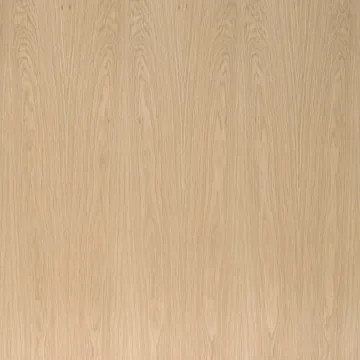
KOSEE white oak for retail interiors
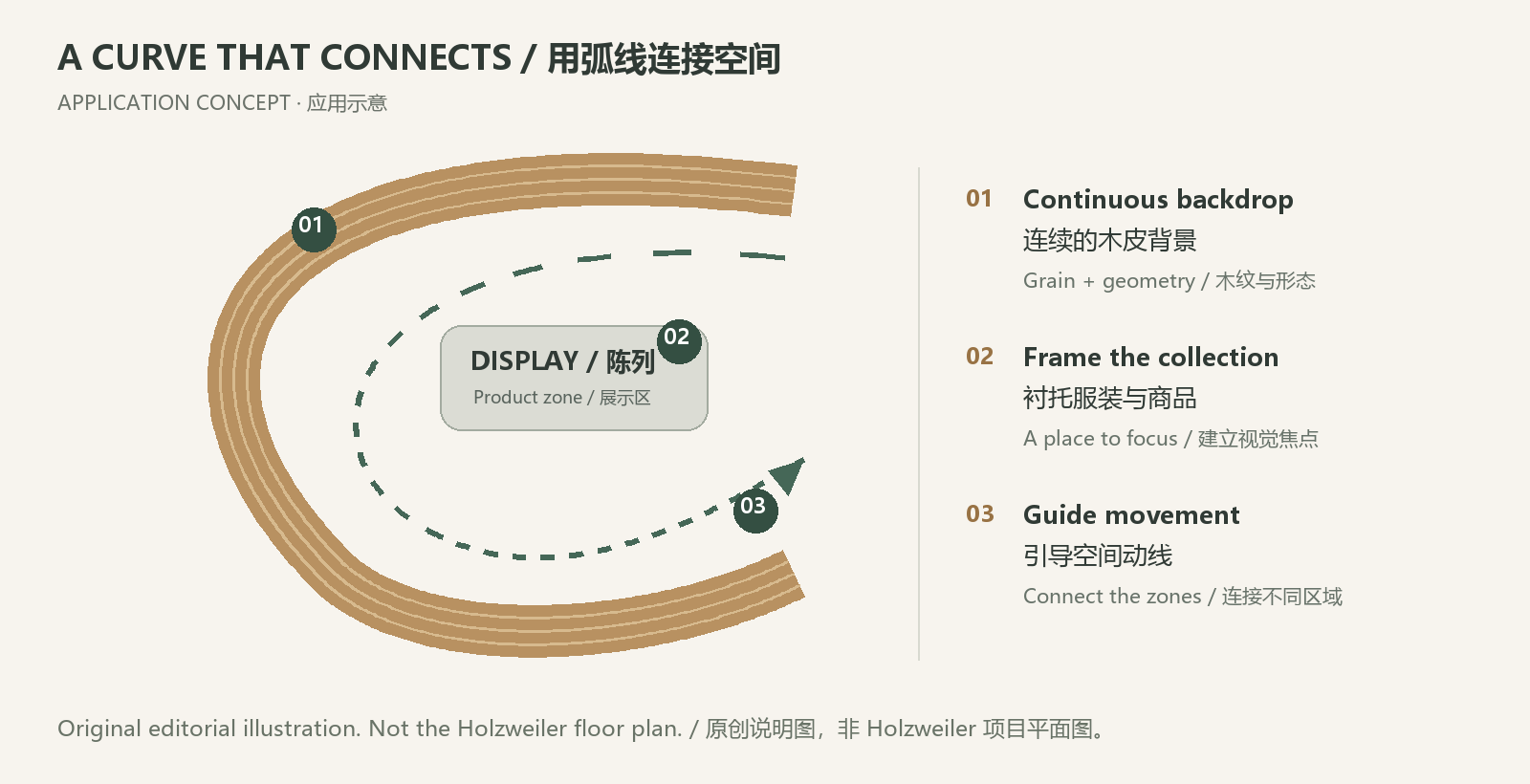
When a material becomes a spatial gesture
The useful design lesson is continuity. A curved surface can link several views of a room without requiring a separate feature at every turn. It can establish a background for browsing, then become the edge of a quieter zone. In that reading, veneer contributes to the way a visitor encounters the collection, rather than serving only as a decorative panel.
For another boutique, the starting question is where a customer should look next. A broad sweep of timber might lead the eye toward a display; a shorter return could frame a seating area. The geometry should follow that intention. A curve used without a clear relationship to merchandise or movement risks becoming an expensive object that occupies valuable floor space.
Grain is part of the fashion palette
In a fashion interior, the background is always seen in relation to fabric. A pale, relatively quiet veneer composition can support a collection with strong color or silhouette. More pronounced grain can give a restrained display a stronger identity. Neither choice is automatically better: the useful comparison places actual garments beside a finished wood sample.
The arrangement of veneer leaves also changes the visual rhythm. Book matching turns successive leaves to create mirrored pairs; slip matching places them alongside one another to repeat the grain. These are established assembly methods described by the Timber Veneer Association of Australia. [2] They are options for a new design, not identified specifications for this store.
Think beyond the small sample. A grain pattern that looks subtle in the hand may become a strong graphic when repeated across a long wall. Review a larger composition alongside shelving, metalwork and textiles. Consider where seams meet a shelf or opening, and whether the wood should feel continuous or deliberately divided into panels.
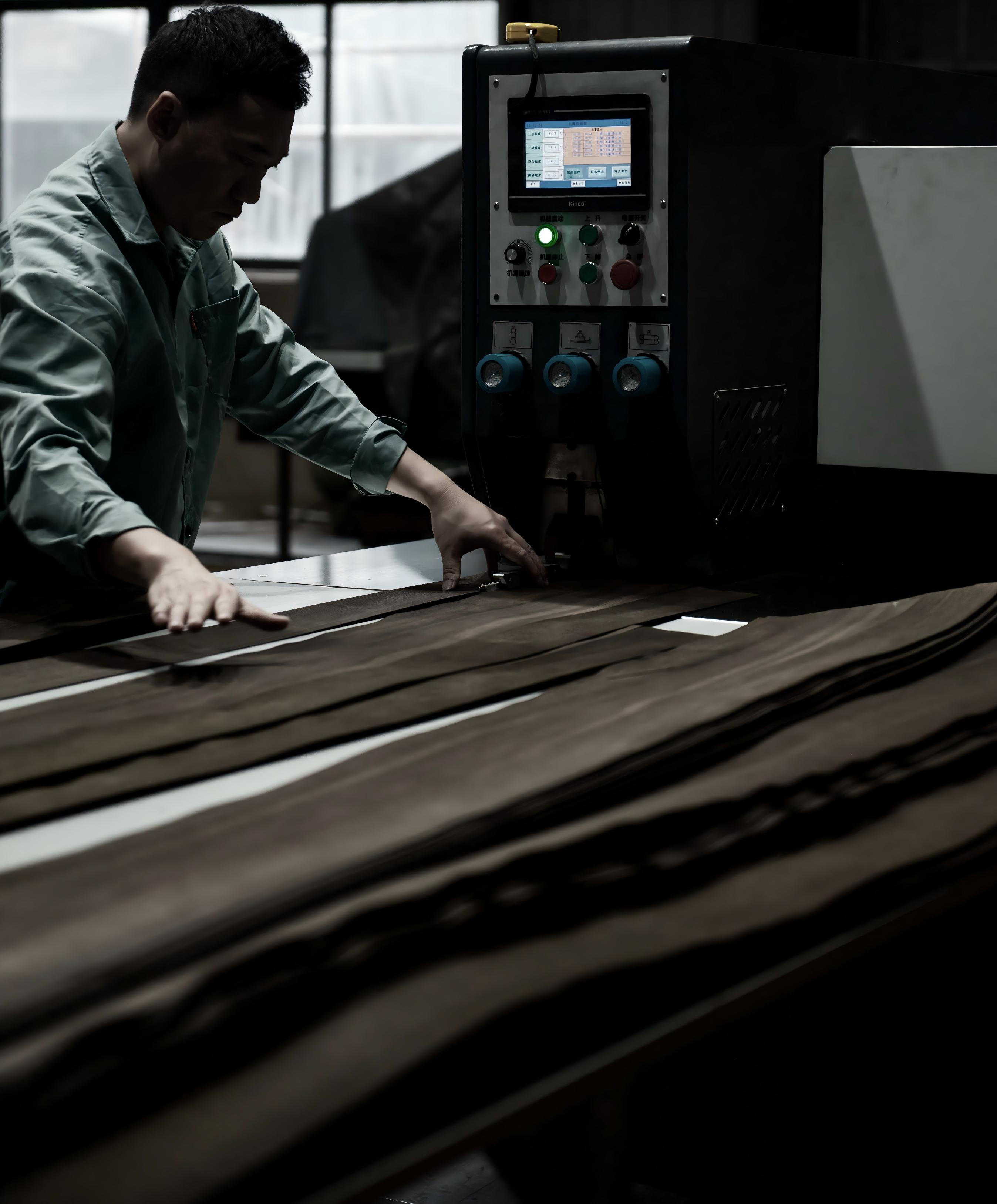
From veneer sheet to curved joinery
A veneered curve is an assembly. Its visible grain is only one part of the result; the support, backing, joints and finish also matter. As one technical example, FormWood describes a two-ply construction suitable for moderate curves and notes that bending capability depends on species. [3] This illustrates why flexibility must be checked for the selected product instead of being assumed from the word veneer.
For a new retail project, begin with the desired curve and grain direction, then develop the construction with the joinery maker. Agree how the surface will be supported, where sheets will join and how exposed edges will be resolved. A physical trial should include the intended backing and finish, not only a loose veneer bent by hand.
A useful mock-up includes a transition: the point where a curve becomes straight, meets a shelf or ends beside a doorway. Those junctions reveal whether the design reads as a coherent surface. Approve the appearance under the intended store lighting as well as in daylight. This turns the sample from a color chip into a test of the design idea.
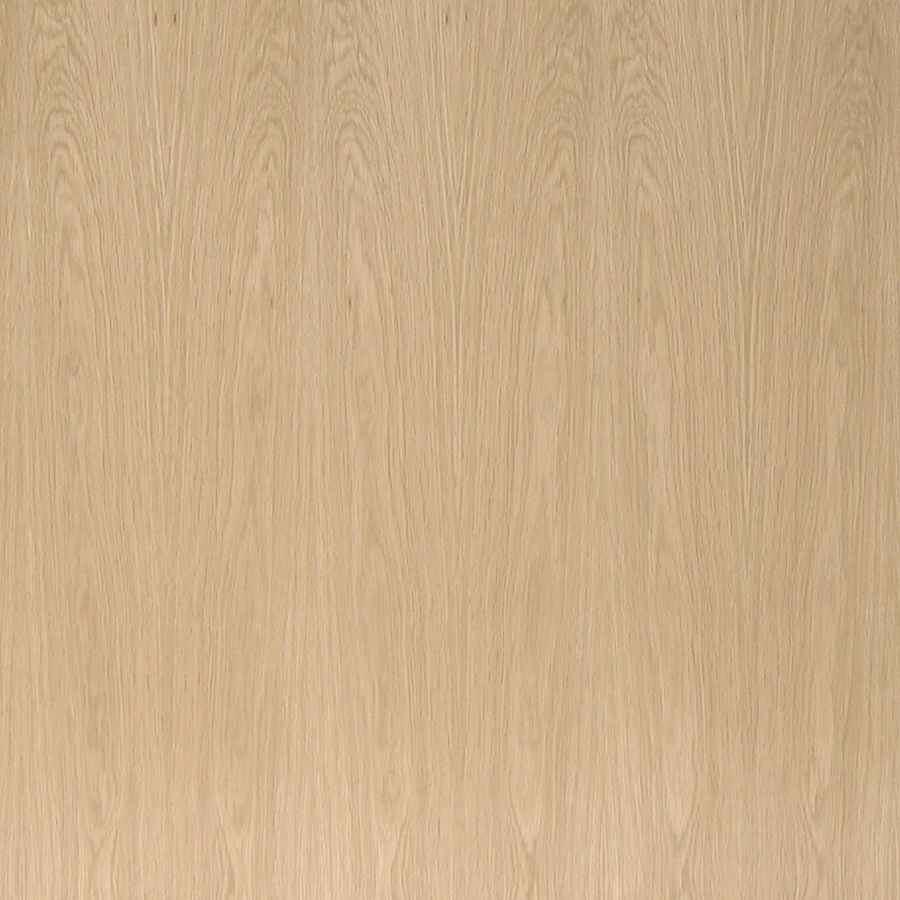
Oak, species and origin: keep the story precise
An oak surface does not establish a country of origin. The project description does not disclose the oak species or supply region, so a more specific origin claim would go beyond the evidence. [1] The KOSEE white oak image included here is a separate material reference, not an identification of the project veneer.
For background, the American Hardwood Export Council describes American white oak as a group of Quercus species, mainly Q. alba, widely distributed in the eastern United States and available as veneer. [4] That information helps explain one material family; it does not establish the source of another project or of a particular supplied batch. For a new commission, ask for the species designation and available origin documentation together with the sample.
Three ways to carry the idea into another store
A clothing backdrop. Use a controlled grain composition behind a rail or a focused seasonal display. Let the clothes remain easy to read, and test both pale and dark garments against the proposed finish. The most useful material choice is the one that works with the collection.
A transition between zones. Introduce a veneered return or curved screen where the shop moves from public display toward seating or fitting. Develop its height and length from sightlines and the actual layout. The purpose is to give that transition a clear character while preserving comfortable movement.
A family of display furniture. Repeat a related veneer tone across a counter front, a plinth and shelving details. The pieces do not need identical shapes. A shared grain direction or edge treatment can connect them, allowing the merchandise to change while the store retains a recognizable material language.
Developing a veneer direction with KOSEE
KOSEE lists natural and developed veneer surfaces, color development, matched layups, backed formats and panel options among its material and manufacturing capabilities. [5, 6] For a fashion-store brief, share the intended application, grain direction, color reference and the role of the surface in the display. Use those inputs to begin a sample discussion; curved assemblies require project-specific review.
Explore the KOSEE material library and manufacturing capabilities to develop your own direction. This is an independent study of a public design project; no KOSEE supply relationship with Holzweiler or this store has been established.
The lasting lesson is to give veneer a clear job in the design. It may organize a route, frame a collection or connect a family of fixtures. When that role is decided early, grain, geometry and fabrication can be developed together, and the wood becomes part of the store experience.
Snøhetta official project gallery